
A significant percentage of college dorm rooms — particularly in older buildings in the Northeast and Pacific Northwest — have no central air conditioning. If you’re moving into one of them during summer orientation, summer research, or a year-round assignment in a non-AC building, you need to go in with a plan. These products actually work.
Fans: the foundation of surviving without AC
Not all fans are equally useful in a small dorm room. Two-fan setups outperform a single fan:
- Tower fan for the main room air circulation — oscillating models move air across the entire room rather than one fixed spot. Look for one with a sleep timer and at minimum three speed settings. Slim profiles take up less floor space in an already-cramped room.
- Window or exhaust fan for pulling hot air out — positioned in the window facing outward, it creates negative pressure that draws cooler outside air in through gaps in the door or a second window. Most effective during early morning and late evening when outside temps drop.
- Desk fan as a supplemental personal cooler — a small, quiet USB-powered fan pointed directly at your face while you work is surprisingly effective for personal comfort even when the room itself is warm.
The cross-ventilation principle: hot air out one window + cool air in through another + air moving across your body = meaningfully more comfortable than running a single fan blowing warm room air around.
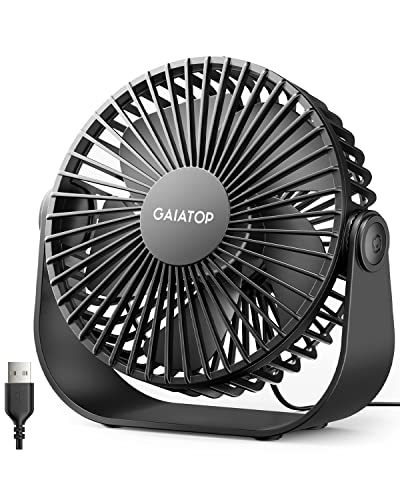 Gaiatop USB Desk Fan – 5.5" Portable (3-Speed)
↗
Gaiatop USB Desk Fan – 5.5" Portable (3-Speed)
↗
 Vornado VFAN Mini Classic Vintage Desk Fan
↗
Vornado VFAN Mini Classic Vintage Desk Fan
↗
 Stanley Quencher H2.0 Tumbler 40oz – Pool Blue
↗
Stanley Quencher H2.0 Tumbler 40oz – Pool Blue
↗
 Hydro Flask 32oz Wide Mouth Water Bottle with Flex Cap
↗
Hydro Flask 32oz Wide Mouth Water Bottle with Flex Cap
↗
Cooling mattress pad
Heat rises, and you sleep on top of your mattress. A cooling mattress topper addresses the biggest source of night discomfort in a hot dorm. Options:
- Gel-infused memory foam — the most common option. The gel draws heat away from your body rather than letting it accumulate under you the way standard memory foam does. Look for 2–3 inch thickness and an open-cell foam design for better airflow.
- Copper-infused foam — similar to gel-infused but with even higher thermal conductivity; tends to sleep slightly cooler than gel alone.
- Mattress cooling pad with active airflow — a flat pad with built-in fans that circulate air underneath you. More expensive but genuinely the most effective option for people who run very hot at night.
If budget is tight, even a basic breathable foam topper over the bare dorm mattress makes a measurable difference — standard dorm mattresses trap heat aggressively.
Moisture-wicking sheets
Cotton sheets hold moisture; moisture-wicking sheets move it away from your body. For hot dorms:
- Bamboo-derived (viscose from bamboo) — extremely soft, naturally temperature-regulating, and more breathable than standard cotton. Often described as feeling cool to the touch.
- Percale weave cotton — if you prefer cotton, percale (a crisp, one-over-one weave) breathes better than sateen, which has a smooth surface but traps more heat.
- Athletic moisture-wicking fabric sheets — similar technology to performance athletic wear; best for people who sweat heavily at night.
Skip microfiber — it’s inexpensive but breathes poorly and gets uncomfortably warm within a few hours of sleep.
Blackout curtains
Direct sunlight through dorm windows can raise room temperature by 10–15°F before noon. Blackout curtains block solar heat gain — the same effect that makes a car left in the sun unbearably hot. Practical notes for dorms:
- Check what curtain rod system your dorm uses — some dorms have pre-installed rods, others have only a window frame
- Tension rods work in most window frames without wall hardware; measure the width first
- True blackout curtains (not just "room darkening") have a foam or rubber backing layer that blocks both light and UV heat
- Side-panel coverage matters — light and heat leak around the edges of curtains that are narrower than the window frame
Additional heat-reduction strategies
- Cooling towel — a microfiber towel that activates with water and stays cool for hours; drape it around your neck while studying
- Portable misting fan — combines a small fan with a fine water mist; works like evaporative cooling; most effective in lower-humidity environments
- Mattress elevation — raising the bed slightly with risers can improve airflow underneath, marginally reducing heat accumulation in the mattress itself
- Blackout window film as an alternative to curtains — adhesive film applied directly to the glass blocks heat without requiring a curtain rod; removable at move-out
- Electric ice fan hack — a bowl of ice placed in front of a small fan creates a DIY evaporative cooler; works best in low-humidity environments and buys 30–60 minutes of noticeably cooler airflow as the ice melts
Managing expectations
None of these products will replicate central air conditioning. What they can do is bring a 90°F dorm room down to a manageable 78–80°F range and make sleeping in humid heat genuinely tolerable rather than miserable. The combination that matters most: a cross-ventilation fan setup at night, a cooling mattress topper, and moisture-wicking sheets. Everything else is supplemental.
This article contains affiliate links. As an Amazon Associate, DormScouter earns from qualifying purchases.
Find all the products mentioned in this guide and more at our Dorm Room Essentials store — everything is Amazon-affiliated so you support DormScouter at no extra cost to you.
As an Amazon Associate, DormScouter earns from qualifying purchases.
💬 Comments & Tips