

Choosing a college dorm is one of the first big decisions you’ll make as an incoming student — and it’s one of the most underrated. Where you live shapes who you meet, how well you sleep, whether you cook or eat out, and how often you actually make it to your 8 AM class. This guide walks you through everything you should consider before you rank your housing preferences.
Start with the basics: what do you actually know about yourself?
Before you look at a single building, answer these honestly:
 Bedsure Twin XL Comforter Set – Grey (5-Piece)
↗
Bedsure Twin XL Comforter Set – Grey (5-Piece)
↗
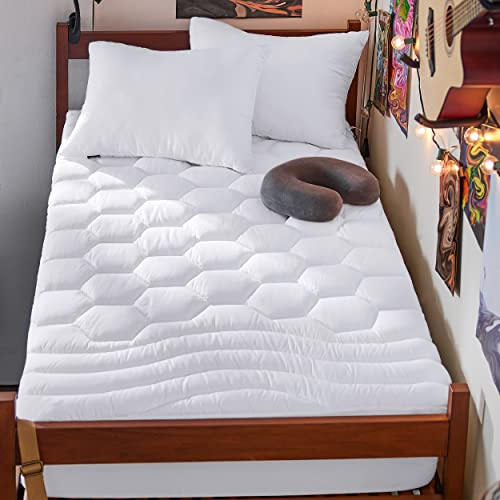 Bedsure Twin XL Mattress Pad – Quilted Cotton Top
↗
Bedsure Twin XL Mattress Pad – Quilted Cotton Top
↗
 Hansleep Twin XL Memory Foam Mattress Topper – 2-Inch
↗
Hansleep Twin XL Memory Foam Mattress Topper – 2-Inch
↗
 Bedsure Twin XL Sheet Set – Dark Grey (4-Piece)
↗
Bedsure Twin XL Sheet Set – Dark Grey (4-Piece)
↗
- Are you an introvert or an extrovert? Extroverts usually thrive in corridor-style dorms with lots of common space. Introverts often prefer suite- or pod-style layouts where they can retreat.
- How’s your sleep? If you wake up at every noise, avoid buildings near dining halls, the main quad, or busy streets.
- Do you want to meet a ton of people fast? The oldest, most social freshman dorms on campus are usually the answer — even if they’re not the nicest.
- Do you have accessibility or sensory needs? Check for elevators, AC, single-occupancy bathrooms, and distance to accessible entrances.
Understand the four main dorm styles
Most U.S. colleges offer some mix of these layouts:
- Corridor: Rooms line a hallway; everyone on the floor shares a communal bathroom. Most social.
- Suite: 2–6 students share a private bathroom and often a common room. Quieter, more private.
- Pod: Small clusters (4–8 rooms) share a bathroom core. A middle ground between corridor and suite.
- Apartment: Full kitchen, private bath, often reserved for upperclassmen.
Freshmen are typically placed in corridor or pod housing, but some schools give you ranked choices. Knowing the terminology helps you read housing pages carefully.
Bathrooms are more important than you think
Seriously. You’ll use the bathroom multiple times a day for nine months. Ask:
- Is it communal (shared by a whole floor), semi-private (shared by a pod or suite), or private?
- Are bathrooms gender-designated, single-user, or all-gender?
- How many showers and stalls per resident? (A ratio worse than 1:10 during peak hours gets painful.)
- Who cleans them and how often?
Location matters more than square footage
A bigger room 15 minutes from your classes is worse than a smaller room 3 minutes from your classes. Look at a campus map and note:
- Walking time to your likely classrooms
- Walking time to the closest dining hall
- Walking time to the library and gym
- Proximity to the main social hub of campus
Amenities and dealbreakers
Read the dorm’s official housing page and look for:
- Air conditioning (not a given on many older campuses in the Northeast)
- Laundry: in-building vs. nearby vs. none, and cost per load
- Shared kitchen access
- Elevator access (matters more than you think when you move in with six boxes)
- Study rooms, common lounges, music practice rooms
Read real reviews, not just the viewbook
Every college’s admissions materials make every dorm look equally perfect. They’re not. Search for student reviews on sites like DormScouter, Reddit’s college-specific subreddits, and YouTube room tours. Pay attention to complaints that show up repeatedly — those are the real issues.
Ask current students these questions
If you can reach current students (campus tours, Instagram, college subreddits), ask:
- What do people complain about most in this building?
- Is there a bed bug or mold history?
- How hot does it get in September without AC?
- How loud is it on weeknights vs. weekends?
- If you could redo housing, would you pick here again?
Final thought
Almost no freshman gets their top-choice dorm, and that’s okay. The people you live with matter more than the building. But going in informed means fewer unpleasant surprises and a better chance at ranking your preferences wisely.
💬 Comments & Tips