

One of the biggest housing decisions you’ll make is whether to live with zero, one, two, or three roommates. Each configuration changes your daily experience dramatically. Here’s an honest breakdown.
Singles
A room to yourself. Rare for freshmen at most large universities, more common at small liberal arts colleges or for upperclassmen.
 Home It Adjustable Bed Risers – 3/5/8 Inch (4-Pack)
↗
Home It Adjustable Bed Risers – 3/5/8 Inch (4-Pack)
↗
 HOLDN' STORAGE Adjustable Bed Risers – 3/5/8 Inch (4-Pack)
↗
HOLDN' STORAGE Adjustable Bed Risers – 3/5/8 Inch (4-Pack)
↗
 YAASHEEN Under Bed Storage with Wheels – 2-Pack (60L)
↗
YAASHEEN Under Bed Storage with Wheels – 2-Pack (60L)
↗
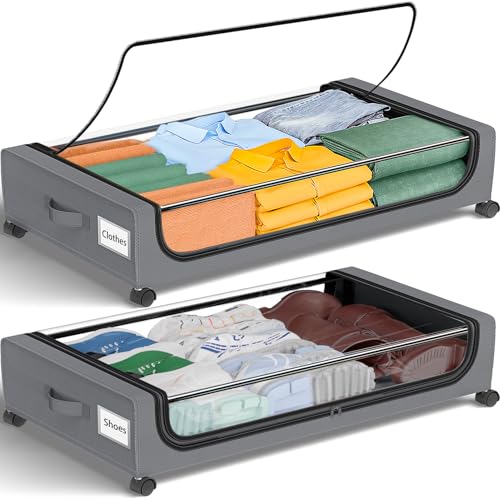 GoMaihe Under Bed Storage with Wheels – 2-Pack (48L)
↗
GoMaihe Under Bed Storage with Wheels – 2-Pack (48L)
↗
Good for:
- Light sleepers, introverts, and neurodivergent students who need a controlled environment
- Students with medical or accessibility needs
- People who already have their social scene (sports team, Greek life, large group of friends)
Drawbacks:
- Usually the most expensive option
- Makes it harder to meet people in your first semester
- Can amplify loneliness if you’re already struggling to connect
Doubles
The classic college setup: you and one roommate.
Good for:
- Most freshmen — it’s the default for a reason
- Learning to live with and communicate with another person
- Balancing privacy with social exposure
Drawbacks:
- A mismatched roommate can make the year miserable
- Less floor space per person than a single
- Sleep schedules need to align, roughly
Most successful freshman experiences come out of doubles. The one built-in friend makes everything easier.
Triples
Three students share one room. Usually one converted double or an oversized room built for three.
Good for:
- Extroverts who love chaos
- Students who want to save money (triples are often cheaper per person)
- Sports teams or friend groups who requested each other
Drawbacks:
- Privacy is basically gone
- Two-against-one dynamics can get toxic fast
- Small rooms forced into triples (sometimes called “forced triples” or “expanded triples”) are a frequent complaint — check reviews for your specific room
Quads and beyond
Four or more students in one unit. Often found in apartment-style housing or suite configurations where you each have your own bedroom but share a common area.
Good for:
- Groups of friends who’ve already bonded
- Upperclassmen who want apartment living
Drawbacks:
- Cleaning becomes a real issue — someone has to enforce it
- Social conflicts compound with each additional person
- Coordinating bathroom use at peak hours
The money question
Generally speaking, more occupants = less per person. A single at most schools costs $1,000–$3,000 more per year than a double. If finances are tight, a double or triple is the pragmatic move.
My honest recommendation
If you’re an incoming freshman: do a double unless you have a specific medical, sensory, or mental health reason to need a single. You’ll meet a person, learn to compromise, and likely build a friendship that lasts the year. If it’s a disaster, most schools will help you move. But the baseline experience is good, and the cost is reasonable.
If you’re a returning student: lean toward whatever configuration matches how you actually live. By sophomore year, you know whether you’re a “need my own space” person or a “love the chaos” person.
Looking for real photos, floor plans, and student reviews of specific dorm rooms? Search your school at DormScouter — a free, growing library of dorm reviews from the students and parents who've actually lived there.
💬 Comments & Tips